
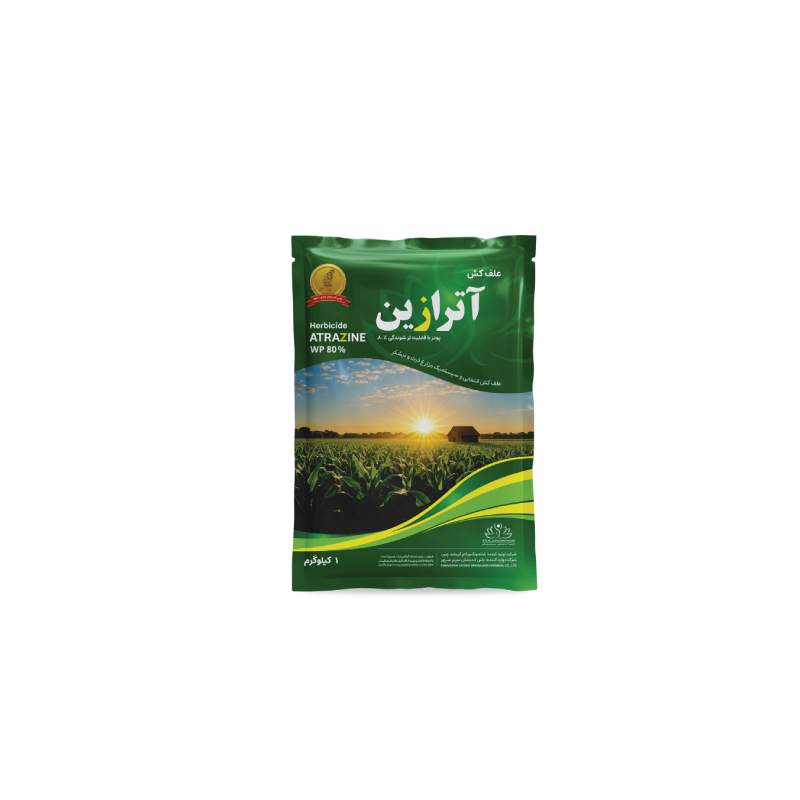
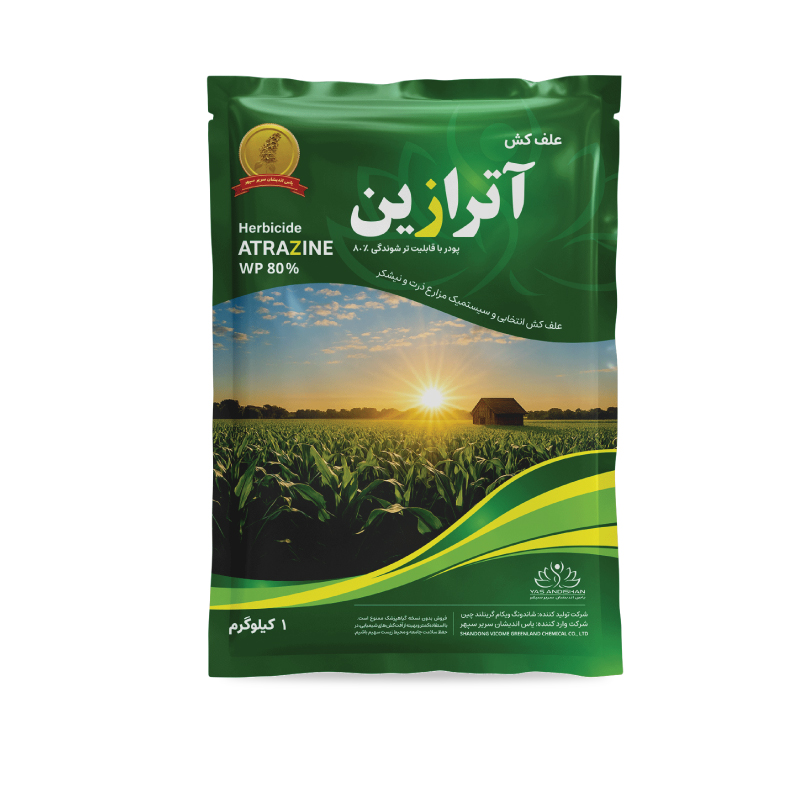
Atrazine WP 80%
Herbicide
 Rayfull
Rayfull
Formulation: Wettable Powder (WP) 80%
Active Ingredient: Atrazine WP 80%
Trade Name: Gesaprim
Manufacturer / Country: Reful – China
Resistance Group: HRAC Group C1 / WSSA Group 5
Packaging: 1 kg aluminum foil pack
Introduction
Atrazine is an effective herbicide widely used for the control of weeds in maize (corn) and sugarcane fields, providing reliable and long-lasting weed management when applied correctly.
What Is Atrazine?
Atrazine is a triazine-group herbicide classified as a selective and systemic herbicide, applied both pre-emergence and post-emergence for the control of broadleaf and grass weeds in maize, sorghum, sugarcane, and non-crop areas.
It is absorbed through both foliage and roots. Atrazine is readily taken up by plant roots and translocated via the apoplastic pathway to various plant organs, where it accumulates in meristems and leaves. Additionally, it can also be absorbed through aerial plant parts. Its application results in growth inhibition in all weed tissues, followed by chlorosis and necrosis of green plant tissues, ultimately leading to weed death.
Directions for Use
Crop Target Weeds Application Rate and Timing
Sugarcane Grass and broadleaf weeds 5 kg Atrazine alone or mixed with 4 kg Ametryn, applied at planting after weed emergence
Maize Grass and broadleaf weeds 5 kg Atrazine alone or mixed with 4–5 L Acetochlor, applied at planting after weed emergence
Use strictly according to the above recommendations. Proper application and adherence to instructions are the responsibility of the user.
Timing of Application
The recommended timing of Atrazine application is provided in the table above. According to several references, the optimal timing is before planting or after planting but before weed emergence, ensuring maximum herbicidal effectiveness.
Tank Mixing
If Atrazine is to be mixed with other agricultural pesticides, a compatibility (jar) test is strongly recommended prior to application. Always consult plant protection specialists before tank mixing with other agrochemicals.
Mode of Action
Atrazine inhibits electron transport in photosynthesis (Photosystem II) by blocking key enzymes involved in the process, thereby disrupting photosynthesis in weeds.
Maize, sorghum, and sugarcane possess detoxification mechanisms that convert Atrazine into hydroxy-atrazine and amino acid derivatives, which are subsequently degraded into inactive compounds. The high tolerance of maize to Atrazine is largely due to its rapid degradation via glutathione-mediated metabolism.
Toxicological Information
Acute oral LD₅₀ (male rats): 1870–3090 mg/kg (a.i.)
WHO Hazard Classification: Class II (Moderately hazardous)
Pre-Harvest Interval (PHI)
No pre-harvest interval has been registered for this herbicide to date.
Antidote
There is no specific antidote. Treatment is symptomatic. In case of poisoning, seek medical attention immediately and provide the product label to the physician.
Safety Precautions During Application
Wear appropriate protective equipment, including work clothing, hat, goggles, mask, impermeable gloves, and boots during spraying. Smoking during application is strictly prohibited. After spraying, wash work clothes thoroughly and take a shower. Avoid discharging pesticide residues into natural environments or water sources.
Storage Conditions and Precautions
Store the product in its original packaging, away from food, feed, children, and animals, in locked storage facilities protected from sunlight and moisture. Recommended storage temperature is 10–35°C. Once the seal is broken, product shelf life may decrease. Do not store diluted spray solutions.
Directions for Preparation and Application
Select and properly calibrate a suitable sprayer. Clean the tank thoroughly and fill it halfway or three-quarters with clean water. Dissolve the recommended amount of herbicide in a separate container, then slowly add it to the spray tank while agitation is running. Add the remaining water to reach the required volume. Use the prepared spray solution within a few hours and avoid prolonged storage.
Persistence
Atrazine has relatively high persistence in soil. At least 12 months after application, no crops other than maize and sorghum should be planted in treated fields.
Application Management
Avoid spraying crops under stress conditions such as cold, drought, or nutrient deficiency.
Do not apply during hot temperatures or windy conditions.
Use clear, low-salinity water for spraying.
Atrazine may leach into groundwater; therefore, overuse and improper application must be avoided.
Atrazine is highly toxic to aquatic organisms and may cause long-term adverse effects in aquatic environments. Prevent contamination of surface waters and streams.
Adequate soil moisture is essential before application. Rainfall after spraying enhances herbicidal activity. If rainfall is insufficient, irrigation is recommended.
Rotate with herbicides from different chemical groups to prevent resistance development.
Vegetables, cucurbits, potato, soybean, peanut, alfalfa, small-grain cereals, and sugar beet are highly sensitive to Atrazine.
Product Authenticity
All imported pesticides of Yas Andishan Sarir Sepehr are distributed nationwide exclusively through Afra Farazin Rahavard.
Important Notes
Application of Atrazine is permitted only with a prescription from a certified plant protection specialist and strictly for the uses described above. Excessive and improper use of pesticides poses serious risks to human health and the environment. Although herbicides are essential for effective weed control and crop production, misuse may cause long-term ecological damage. Therefore, Atrazine must be applied responsibly and in full compliance with national plant protection regulations.
Packaging: 1 kg pack
Manufacturer: Reful
Country of Origin: China
Related Products